
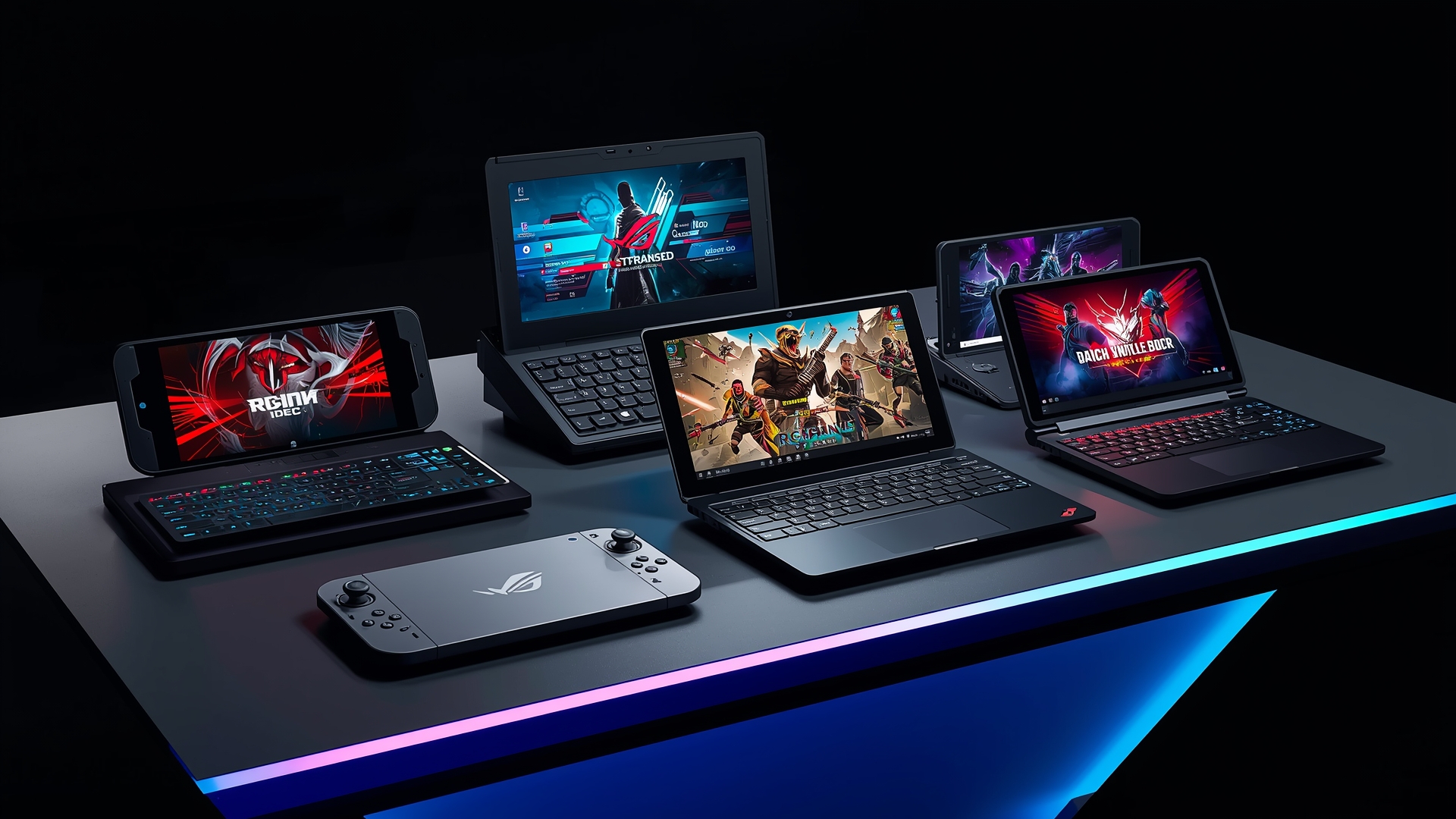
The Rise of Handheld Gaming PCs
The concept of portable gaming isn’t new, but the capability to run full-fledged PC games on a device you can comfortably hold is a relatively recent phenomenon. It has truly captured the public’s imagination, creating a whole new category in the gaming tech sphere.
### From Niche to Mainstream: A Brief History
For years, the idea of a powerful, portable PC gaming device was relegated to niche manufacturers. These early attempts often came with exorbitant prices and significant compromises in performance, battery life, or ergonomics. Devices were typically bulky, loud, and required extensive tweaking to run games adequately. They were curiosities for enthusiasts rather than viable alternatives.
The landscape began to shift dramatically with the advent of more efficient, powerful AMD APUs and a growing demand for flexible gaming solutions. The technological leaps in processor efficiency, integrated graphics capabilities, and battery technology were crucial catalysts, paving the way for a new generation of devices.
### Key Players and Their Innovations
Valve ignited the mainstream market with the introduction of the Steam Deck in late 2021. Its direct integration with the Steam ecosystem, competitive pricing, and focus on usability made it an instant hit. The Steam Deck demonstrated that a well-optimized, affordable **Handheld Gaming PC** could not only exist but thrive, opening the floodgates for other manufacturers.
Following Valve’s success, major PC manufacturers entered the fray. ASUS launched the ROG Ally, boasting more raw power and a Windows operating system, appealing to those who wanted full desktop flexibility. Lenovo soon followed with the Legion Go, pushing boundaries with an even larger display and detachable controllers, reminiscent of the Nintendo Switch but on a grander scale. Each offers a distinct philosophy, catering to different segments of the growing market. Other players like AYANEO and GPD continue to innovate, offering premium options with specialized features.
What Makes These Devices Stand Out?
Beyond their mere existence, it’s the combination of advanced technology and thoughtful design that truly elevates **Handheld Gaming PCs** into a category of their own. They are carefully engineered gaming machines, optimized for their unique purpose.
### Performance and Portability: A Delicate Balance
Achieving a balance between raw processing power and a portable, battery-friendly form factor is perhaps the greatest engineering challenge. Modern **Handheld Gaming PCs** leverage custom or highly optimized AMD APUs (Accelerated Processing Units). These chips combine powerful CPU cores with capable RDNA-based integrated graphics.
They are designed to deliver impressive frame rates at lower resolutions (typically 720p or 800p), which is perfectly suited for the devices’ smaller screens. All this occurs while managing thermal output and power consumption effectively. Advancements in RAM speed and SSD storage also ensure quick load times and smooth gameplay. While they may not rival high-end desktop GPUs, their optimized performance for their target resolution is remarkably effective, allowing users to play graphically intensive titles like Cyberpunk 2077 or Baldur’s Gate 3 on the go.
### The Operating System Advantage
One of the defining features setting **Handheld Gaming PCs** apart from traditional consoles is their operating system. Devices like the ROG Ally and Legion Go run full Windows, offering unparalleled flexibility. Users can install any game launcher (Steam, Epic Games Store, GOG, Xbox Game Pass), productivity software, or even use them as a mini-PC connected to an external monitor. This open ecosystem means no game library is off-limits, assuming the hardware can handle it.
The Steam Deck, on the other hand, utilizes SteamOS, a Linux-based operating system heavily optimized for gaming and controller input. While requiring Proton for many Windows-native games, its seamless integration with Steam provides an exceptionally smooth, console-like experience specifically tailored for the device. This choice of OS dictates much of the user experience and compatibility.
### Ergonomics and Display Technology
A truly great **Handheld Gaming PC** must feel comfortable during extended play sessions. Manufacturers are investing heavily in ergonomic designs, ensuring button placement, joystick feel, and overall weight distribution contribute to a pleasant gaming experience. Features like haptic feedback, customizable back buttons, and responsive triggers are becoming standard.
The displays are equally crucial. Bright, vibrant IPS panels with high refresh rates (up to 120Hz on some models) make games look fantastic despite the smaller screen size. Touchscreen capabilities are also standard, facilitating navigation within desktop environments or specific game interfaces. The display acts as the primary window into the gaming world, and its quality significantly impacts immersion and enjoyment.

The Impact on the Gaming Landscape
The emergence of **Handheld Gaming PCs** is more than just a new product category; it’s a disruptive force reshaping long-held notions about PC gaming and portability.
### Redefining “Portable Gaming”
For decades, ‘portable gaming’ was synonymous with dedicated handheld consoles or, more recently, mobile phone gaming. While these platforms offer immense value, they often involve compromises in game selection, graphical fidelity, or control schemes compared to their PC counterparts. **Handheld Gaming PCs** shatter this paradigm by offering the vast, open, and graphically rich world of PC gaming in a truly portable format. It’s no longer about playing mobile-optimized versions; it’s about playing the *actual* PC game. This shift empowers gamers to take their entire digital library with them, from indie gems to demanding AAA blockbusters, without being tethered to a desktop or laptop. The freedom to game anywhere, anytime, with PC-level fidelity is a game-changer for many.
### Bridging the Console-PC Divide
These devices occupy a fascinating middle ground between traditional gaming consoles and high-end gaming PCs. They offer the ease of use and dedicated gaming form factor of a console, combined with the versatility, open ecosystem, and vast game library of a PC. This hybridization appeals to a wide audience: console gamers curious about PC titles but intimidated by the cost or complexity of a desktop setup, and PC gamers who crave portability without sacrificing their game library. The accessibility provided by **Handheld Gaming PCs** could potentially serve as a gateway for many new users into the broader PC gaming world, lowering the barrier to entry.
### Challenges and Considerations for Handheld Gaming PCs
Despite their appeal, **Handheld Gaming PCs** are not without their limitations. Battery life remains a significant hurdle, with many demanding titles draining the battery in as little as 1-2 hours. Performance can also be inconsistent, requiring users to tinker with in-game settings or device power profiles to find a balance between frame rate and battery longevity. For a detailed look at the performance of the latest devices, check out this comprehensive review on [PC Gamer](https://www.pcgamer.com/best-handheld-gaming-pc/).
The learning curve for Windows-based devices can be steeper than a traditional console, requiring some technical familiarity for driver updates, game launcher management, and system optimization. Price is another factor; while the Steam Deck offers an accessible entry point, many premium models can be quite expensive. Furthermore, the smaller screen size, while portable, can sometimes hinder the readability of UI elements in certain games, necessitating compromises in visual clarity.
The Future of Handheld Gaming PCs
The current landscape is just the beginning. The rapid pace of innovation suggests an even more exciting future for **Handheld Gaming PCs**.
### What’s Next in Hardware?
Future iterations will likely focus on even greater power efficiency, extended battery life, and more advanced cooling solutions to push performance further within compact chassis. We can anticipate next-generation APUs from AMD and potentially Intel, offering significant leaps in integrated graphics capabilities, perhaps even incorporating dedicated AI accelerators for features like super-resolution.
Displays may evolve to incorporate OLED technology more widely, offering deeper blacks and better contrast, along with higher resolutions while maintaining high refresh rates. Improved haptics, more modular designs for repairability or customization, and even integrated mobile connectivity (5G) could become standard features, transforming these devices into truly ubiquitous gaming and computing platforms.
### Software Ecosystem Evolution
The software experience is also ripe for improvement. Valve continues to refine SteamOS, and we can expect similar efforts from Microsoft and third-party developers to optimize Windows for smaller screens and controller-first input. Custom front-ends and launchers designed specifically for **Handheld Gaming PCs** will likely become more prevalent, streamlining the user experience and making it easier for new users to jump into gaming without extensive setup.
Cloud gaming integration will also play a larger role, potentially allowing users to stream more demanding titles that the local hardware can’t run natively, further expanding the capabilities of these devices. This hybrid approach — local rendering for less demanding games and cloud streaming for the most intensive — could unlock unprecedented flexibility. Explore the potential of streaming games further by visiting /exploring-cloud-gaming-platforms.
### Market Growth and Competition
The success of current models guarantees that more manufacturers will enter the market, leading to increased competition, wider product variety, and potentially more accessible price points. This fierce competition will drive innovation, forcing companies to differentiate through unique features, superior performance, or specialized software experiences. The **Handheld Gaming PCs** market is poised for significant growth, becoming a distinct and powerful segment of the overall gaming industry, challenging traditional console and portable gaming platforms. Analysts predict significant growth in the portable gaming segment; read more about market projections at [The Verge](https://www.theverge.com/2023/11/27/23977372/portable-gaming-pc-market-explosion).
Conclusion
The rise of **Handheld Gaming PCs** marks a pivotal moment in the evolution of gaming technology. Devices like the Steam Deck, ROG Ally, and Lenovo Legion Go are not just gadgets; they are powerful statements about the future of how and where we interact with our digital worlds. They offer an unprecedented blend of PC flexibility and console-like portability, democratizing access to vast gaming libraries and pushing the boundaries of what’s possible in mobile entertainment. While challenges like battery life and optimization persist, the rapid pace of innovation and the enthusiastic adoption by gamers signal a bright, expansive future for these impressive machines. As hardware continues to advance and software ecosystems mature, **Handheld Gaming PCs** are set to solidify their position as an indispensable part of the gaming landscape, empowering gamers to truly play anywhere, anytime, without compromise.